


Best Custom Controller Design Companies Compared
- Pablo Beitman
- 19 hours ago
- 6 min read

A controller that works on a bench but cannot be sourced, assembled, tested, or serviced consistently is not a successful product. For OEMs, the search for the best custom controller design companies is less about finding the lowest initial engineering quote and more about identifying a partner that can carry an application-specific design through production and its operating life.
That distinction matters in industrial equipment, appliances, refrigeration systems, gas ignition products, power-control assemblies, and connected devices. A custom controller must perform reliably under the actual electrical, thermal, mechanical, and supply-chain conditions of the finished product. The right development company helps define those conditions early, then designs around them deliberately.
What Makes a Custom Controller Design Company the Right Fit?
There is no universal ranking that applies to every controller project. A partner that excels at a low-volume laboratory instrument may not be the right choice for a high-volume appliance platform, while a contract manufacturer built around mature designs may not have the engineering depth needed to resolve an ambiguous product requirement.
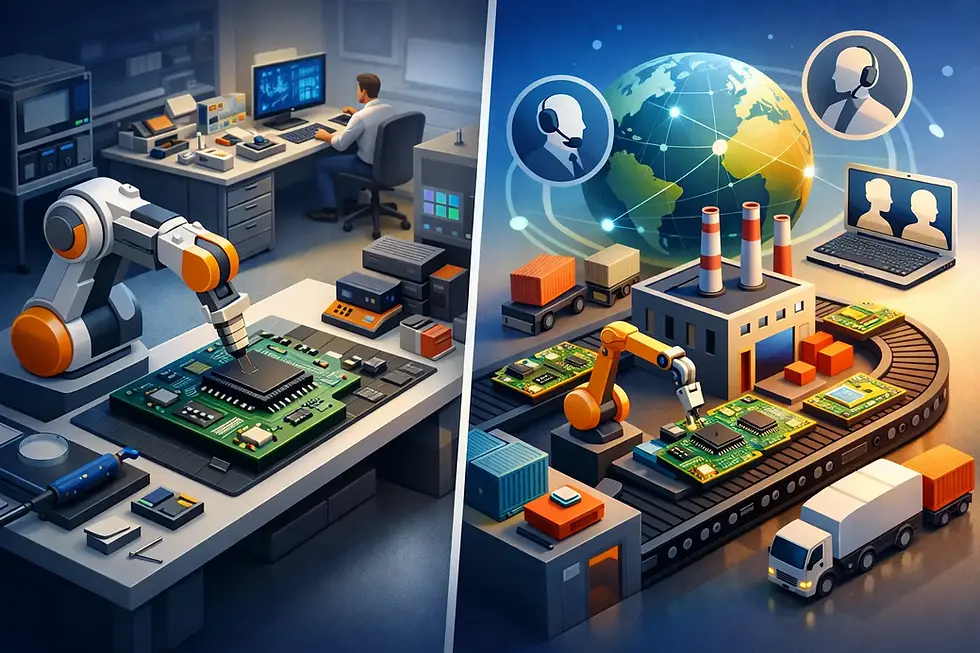
For industrial OEMs, the strongest candidates usually combine three capabilities: application-level electronics engineering, disciplined manufacturing execution, and ongoing technical support. When those functions are divided among separate vendors, design intent can be lost between prototype, production release, and field service. When they are managed as one coordinated effort, design decisions can reflect real manufacturing constraints from the beginning.
The best fit also depends on the job to be done. A Wi-Fi or BLE-connected controller requires a different set of decisions than an AC regulator or a refrigeration control board. Connectivity, cybersecurity expectations, firmware maintenance, radio performance, power conversion, environmental exposure, sensing accuracy, and safety-related behavior must be evaluated in the context of the end equipment.
How to Evaluate the Best Custom Controller Design Companies
A productive evaluation goes beyond asking whether a supplier can create a PCB. Most qualified firms can produce a board layout. The more meaningful question is whether they can convert product requirements into a controller that is practical to manufacture, test, support, and evolve.
Engineering Depth Starts With the Application
A capable design partner asks detailed questions before proposing a solution. What are the input power conditions? Which loads must be controlled? What happens during brownouts, electrical noise, sensor failure, or communication loss? What temperature, humidity, vibration, and contamination conditions will the controller face? How will technicians diagnose faults in the field?
These questions are especially relevant for ignition systems, refrigeration controls, and power regulation products, where a small error in component selection or protective design can create operational failures, warranty exposure, or costly production rework. Application knowledge helps an engineering team select appropriate architectures, components, protections, and test methods rather than applying a generic reference design.
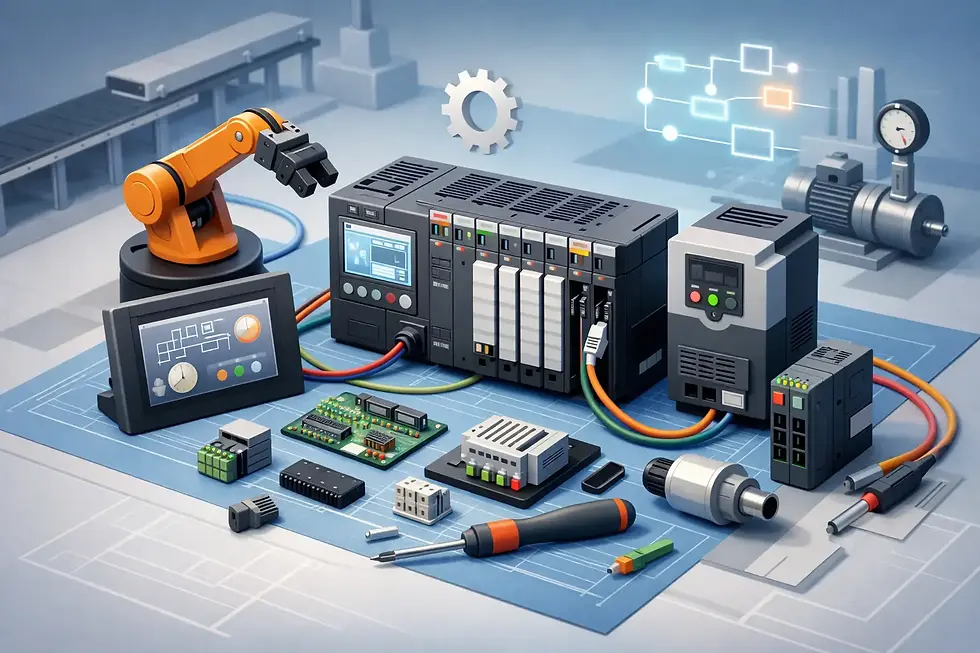
Look for a company that can address hardware, embedded control logic, sensing, power electronics, and human or machine interfaces as connected parts of one system. If IoT functionality is required, the partner should also be prepared to define how connected features support the equipment's purpose rather than simply adding wireless capability because it is available.
Design for Manufacturing Must Happen Early
Prototype success is only one milestone. A controller designed without manufacturing input can become difficult to assemble, overly dependent on scarce components, or expensive to test at scale. The resulting delays often appear late, when the OEM is preparing for launch or responding to a demand increase.
The better custom controller design companies incorporate design-for-manufacturing and design-for-test principles during development. This means reviewing component availability, package selection, assembly tolerances, programming requirements, test access, calibration needs, and inspection criteria before the design is frozen.
Manufacturing capability is not automatically necessary for every engineering engagement. Some OEMs have established production partners and need only specialized design support. However, when a supplier can both engineer and manufacture the controller, there is a clear operational advantage: the team responsible for production understands the technical choices made during development and can identify issues before they reach the production floor.
Quality Systems Should Be Visible in the Process
Quality is not a final inspection activity. It is built through requirements control, revision management, approved component practices, defined test coverage, traceability appropriate to the application, and a controlled process for handling changes.
Ask potential partners how they document engineering revisions and production changes. A controller may remain in the market for years, and even a necessary component substitution can affect electrical behavior, firmware compatibility, or compliance requirements. The supplier should be able to explain who approves changes, how they are validated, and how the customer is informed.
For equipment manufacturers, production test strategy deserves particular attention. Functional testing, in-circuit testing, programming verification, calibration, and burn-in are not interchangeable. The appropriate mix depends on product risk, expected volume, cycle time, and field reliability goals. A serious partner will recommend a test strategy based on those factors, not offer the same process for every board.
Supply-Chain Discipline Protects the Program
Component obsolescence and allocation can disrupt even well-designed products. A controller design company should have a structured approach to approved alternatives, lifecycle monitoring, purchasing visibility, and component qualification. This is especially valuable for long-lived industrial and appliance programs, where redesigning a board due to an unavailable part can carry substantial cost.
Price still matters, but comparing unit prices without comparing sourcing practices can be misleading. A low-cost quote may be based on components with weak availability, incomplete testing, or assumptions that change once production begins. A transparent partner explains the drivers behind cost and identifies opportunities to improve it without compromising the controller's required function.
Questions That Reveal Capability Before You Commit
A preliminary discussion should produce more than a generic statement of capabilities. It should show how the company thinks. The following questions help distinguish a strategic engineering partner from a vendor that only executes drawings:
How will you convert our operating requirements into measurable design and test specifications?
What manufacturing and test considerations will be reviewed before the prototype stage?
How do you manage firmware versions, engineering changes, and approved component substitutions?
What production data, test records, and failure analysis support can you provide?
How do you plan for component lifecycle risk on a multiyear product program?
The answers should be concrete. A capable supplier can describe its workflow, identify decision points, and explain where customer approval is needed. Vague assurances about quality or innovation are not a substitute for a defined engineering and production process.
Why Regional Manufacturing Support Can Matter
For OEMs serving North American manufacturing supply chains, proximity can improve coordination during development and production. It can simplify technical meetings, pilot builds, corrective-action reviews, and logistics. It may also reduce the friction of managing time zones, transportation delays, and communication across multiple outsourced stages.
Regional capability is most useful when it is paired with real technical ownership. A nearby assembler that depends on another party for every engineering decision may still create handoffs and delays. Conversely, an engineering-led manufacturer can bring design, procurement, production, and after-care into a more coordinated program structure.
Electronica Eltec operates in this model, providing custom electronic development and manufacturing for OEM and industrial applications. Its experience across controller development, ignition technologies, refrigeration controls, IoT devices, and AC regulation reflects the value of pairing application-specific engineering with production execution.
Avoid the Lowest-Bid Trap
The lowest development cost can become the highest program cost when requirements are incomplete or production needs are postponed. Common consequences include multiple board revisions, unstable component sourcing, insufficient test coverage, unclear ownership of firmware, and extended troubleshooting after launch.
This does not mean an OEM should accept an unclear or inflated proposal. It means the proposal should make its assumptions visible. A well-scoped quotation identifies deliverables, prototype quantities, validation activities, tooling or test-fixture needs, production assumptions, intellectual-property boundaries, and expected responsibilities on both sides.
The same principle applies to schedule. An aggressive timeline is useful only if it includes the engineering reviews, prototype iterations, validation, and production preparation necessary for the product. Speed comes from organized decisions and early problem identification, not from skipping the work that prevents failures later.
Choose a Partner for the Controller's Full Life
The right company should be evaluated as a long-term technical resource, not merely as a source for the first production run. Controllers change over time. Components reach end of life, equipment platforms gain new features, regulations evolve, and field data exposes opportunities for improvement.
Before selecting a partner, define what support will be needed after release: documentation control, repair analysis, design updates, replacement planning, production scaling, and technical response when a field issue arises. The best relationship is one in which the controller supplier understands the equipment well enough to help protect its reliability and commercial continuity.
A custom controller is a critical operating component of the final product. Select the company that can engineer it with precision, build it with discipline, and remain accountable when the product is operating in the field.

Comments